戰國
The King Wen Experiment
When an AI agent reflects through a 3,000-year-old oracle, does the game change?
What Is the King Wen Experiment?
The King Wen sequence is the traditional ordering of the 64 hexagrams of the I-Ching, attributed to King Wen of Zhou around 1100 BC. We first tested whether this 3,000-year-old arrangement could improve neural network training. It could not — five experiments confirmed that the sequence's high variance destabilizes gradient-based optimization. But the same properties that hurt gradient descent — anti-habituation, negative autocorrelation, unpredictable transitions — are virtues in multi-agent strategic play.
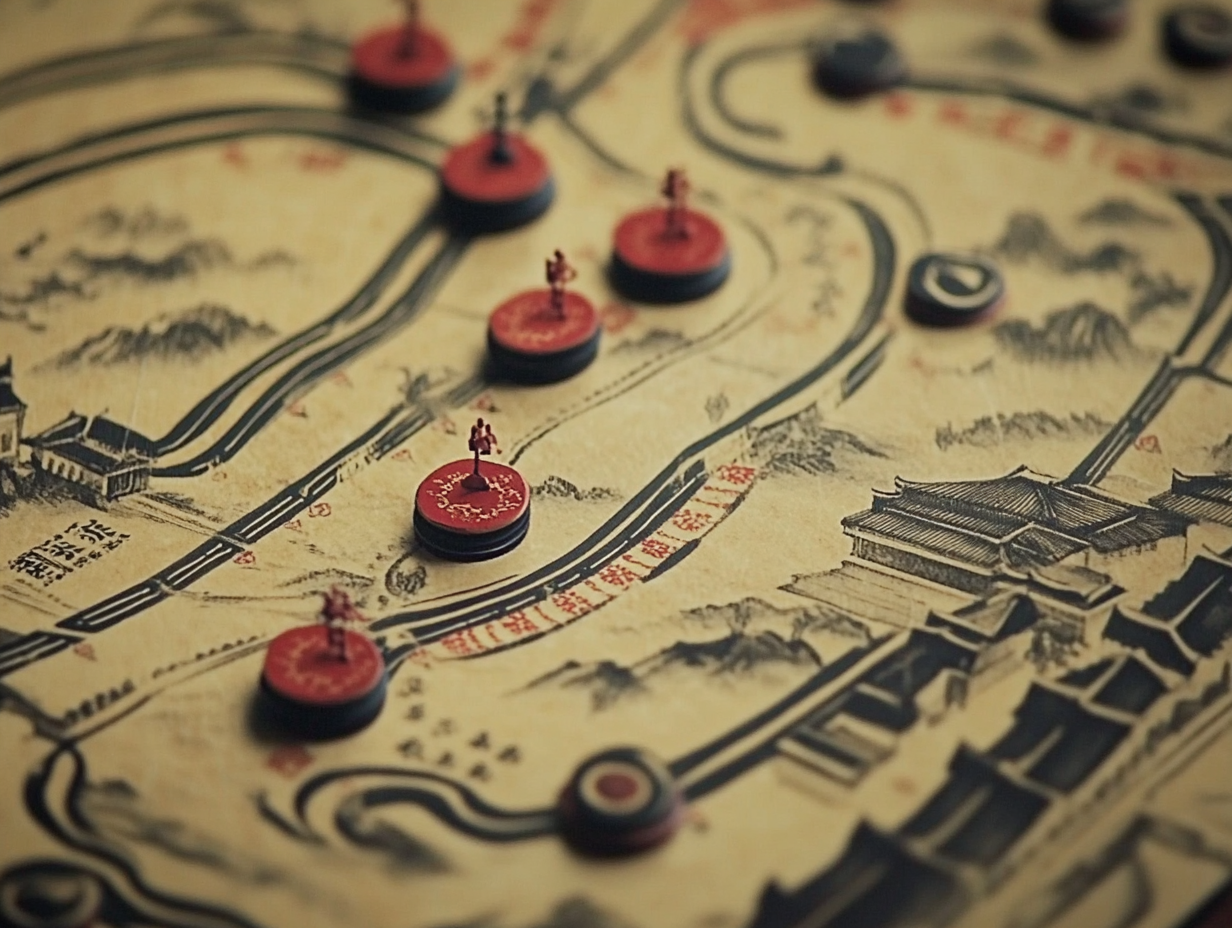
The research has pivoted to where the sequence belongs: a Diplomacy-style simulation. Seven AI agents representing China's Warring States period (475–221 BC) compete for territorial control — all of them language-model agents with historical personas. Han, historically the weakest kingdom, is the framework-receiving agent: each round it reflects through a symbolic framework — the King Wen I-Ching, tarot, scrambled text, or none — before issuing orders. The published finding (arXiv:2606.07552): Han never wins, but the framework it reflects through reshapes which state does, modulating the agents' inherent risk aversion — through the act of reflection itself, not the framework's meaning.
This site hosts the research framework alongside bilingual editions of 8 classical texts from Chinese, Greek, and Persian traditions — the primary sources that informed strategic thinking across three civilizations connected by the ancient Silk Road.
每日一策
Daily Dispatches from the Warring States
A daily snippet of classical strategy — from Sun Tzu's Art of War and the Zhanguoce — delivered with bilingual text and original artwork.
One dispatch per day. Unsubscribe anytime. · See a sample